BG 7.19
 “
600+
“
600+
“
600+
Devanagari
बहूनां जन्मनामन्ते ज्ञानवान्मां प्रपद्यते ।
वासुदेव: सर्वमिति स महात्मा सुदुर्लभ: ॥ १९ ॥
Verse text
bahūnāṁ janmanām ante
jñānavān māṁ prapadyate
vāsudevaḥ sarvam iti
sa mahātmā su-durlabhaḥ
Synonyms
bahūnām
—
many
;
janmanām
—
repeated births and deaths
;
ante
—
after
;
jṣāna-vān
—
one who is in full knowledge
;
mām
—
unto Me
;
prapadyate
—
surrenders
;
vāsudevaḥ
—
the Personality of Godhead, Kṛṣṇa
;
sarvam
—
everything
;
iti
—
thus
;
saḥ
—
that
;
mahā-ātmā
—
great soul
;
su-durlabhaḥ
—
very rare to see.
Translation
After many births and deaths, he who is actually in knowledge surrenders unto Me, knowing Me to be the cause of all causes and all that is. Such a great soul is very rare.
Translation (Visvanatha Cakravarti Thakura)
19. The jṣānī, seeing Vāsudeva everywhere, surrenders to Me through devotee association after many births. He has a steady mind and is very rare.
Translation (Baladeva Vidyabhusana)
19. Any of the other three types, becoming a jṣānī after many births, attains Me through devotee association. He understands that Kṛṣṇa is everything. His mind is attached only to Me. Such a person is very rare.
Purport
The living entity, while executing devotional service or transcendental rituals after many, many births, may actually become situated in transcendental pure knowledge that the Supreme Personality of Godhead is the ultimate goal of spiritual realization. In the beginning of spiritual realization, while one is trying to give up one’s attachment to materialism, there is some leaning towards impersonalism, but when one is further advanced he can understand that there are activities in the spiritual life and that these activities constitute devotional service. Realizing this, he becomes attached to the Supreme Personality of Godhead and surrenders to Him. At such a time one can understand that Lord Śrī Kṛṣṇa’s mercy is everything, that He is the cause of all causes, and that this material manifestation is not independent from Him. He realizes the material world to be a perverted reflection of spiritual variegatedness and realizes that in everything there is a relationship with the Supreme Lord Kṛṣṇa. Thus he thinks of everything in relation to Vāsudeva, or Śrī Kṛṣṇa. Such a universal vision of Vāsudeva precipitates one’s full surrender to the Supreme Lord Śrī Kṛṣṇa as the highest goal. Such surrendered great souls are very rare.
This verse is very nicely explained in the Third Chapter (verses 14 and 15) of the Śvetāśvatara Upaniṣad:
sahasra-śīrṣā puruṣaḥ sahasrākṣaḥ sahasra-pāt sa bhūmiṁ viśvato vṛtvā- tyātiṣṭhad daśāṅgulam
puruṣa evedaṁ sarvaṁ yad bhūtaṁ yac ca bhavyam utāmṛtatvasyeśāno yad annenātirohati
“Lord Viṣṇu has thousands of heads, thousands of eyes and thousands of feet. Entirely encompassing the whole universe, He still extends beyond it by ten fingers’ breadth. He is in fact this entire universe. He is all that was and all that will be. He is the Lord of immortality and of all that is nourished by food.” In the Chāndogya Upaniṣad (5.1.15) it is said, na vai vāco na cakṣūṁṣi na śrotrāṇi na manāṁsīty ācakṣate prāṇa iti evācakṣate prāṇo hy evaitāni sarvāṇi bhavanti: “In the body of a living being neither the power to speak, nor the power to see, nor the power to hear, nor the power to think is the prime factor; it is life which is the center of all activities.” Similarly Lord Vāsudeva, or the Personality of Godhead, Lord Śrī Kṛṣṇa, is the prime entity in everything. In this body there are powers of speaking, of seeing, of hearing, of mental activities, etc. But these are not important if not related to the Supreme Lord. And because Vāsudeva is all-pervading and everything is Vāsudeva, the devotee surrenders in full knowledge (cf. Bhagavad-gītā 7.17 and 11.40).
Purport (Visvanatha Cakravarti Thakura)
“You say that this jṣānī is fixed in You as the supreme goal. Consequently this jṣānī bhakta attains You. But after how long does a jṣānī become qualified as a devotee?”
He who possesses knowledge, seeing Vāsudeva everywhere, after many births surrenders to Me. Such a saintly person surrenders to Me through chance association with devotees. That jṣānī-bhakta has a very steady mind (mahātmā), and is very rare. As I have said, manuṣyānāṁ sahasreṣu, out of thousands, one person may know Me in truth. What to speak of the rarity then, of the kevala or ekānta bhakta? Such a person is even rarer.
Purport (Baladeva Vidyabhusana)
“What is the final position of these three types of devotees?”
These three, being My devotees, by the power of performing bhakti to Me, after experiencing the highest happiness with material pleasures for many lives, finally in one birth find these pleasures distasteful, and by association with saintly persons who know My svarūpa, they gain knowledge of My svarūpa (jṣānavān) and surrender to Me. It is understood that they attain Me.
What is the form of such a person’s knowledge? He understands that Kṛṣṇa, the son of Vasudeva, is everything: all things in existence depend on Kṛṣṇa for their manifestation and for their continued existence in those forms. What is dependent for its form and continued existence on Him, is designated as Himself. Similarly it is pointed out in the Chāndogya Upaniṣad, that prāṇa is designated as the voice and eye, because those things are all dependent on prāṇa for preservation of their forms.
na vai vāco na cakṣūṁṣi na śrotrāṇi na manāṁsīty ācakṣate prāṇā ity evācakṣate prāṇo hy evaitāni sarvāṇi bhavati
One does not call this a voice, an eye, an ear or a mind. They are all called prāna. Prāṇa alone is all these things. Chāndogya Upaniṣad 5.1.15
Since all things in existence are pervaded by Vāsudeva, Vāsudeva is everything. [Note: Vāsudeva is everything in the sense that everything is dependent upon Him. By His powers he pervades everything. One should not interpret the statement to mean that only Brahman is real, and everything else is false.] Arjuna will also say later sarvaṁ samāpnoṣi tato’si sarvam: You cover everything and therefore You are everything. (BG 11.40)
Such a person, after destroying all material desires, and aspiring only for Me, having generously dedicated his soul to Me, offering his very self to Me (mahātmā), is very rare even among millions of jṣānīs. Such a person in knowledge (jṣānavān) should be understood to be the same as that described in verse 17 with the words priyo hi jṣānino’tyartham: the jṣānī holds Me extremely dear.
Surrender Unto Me
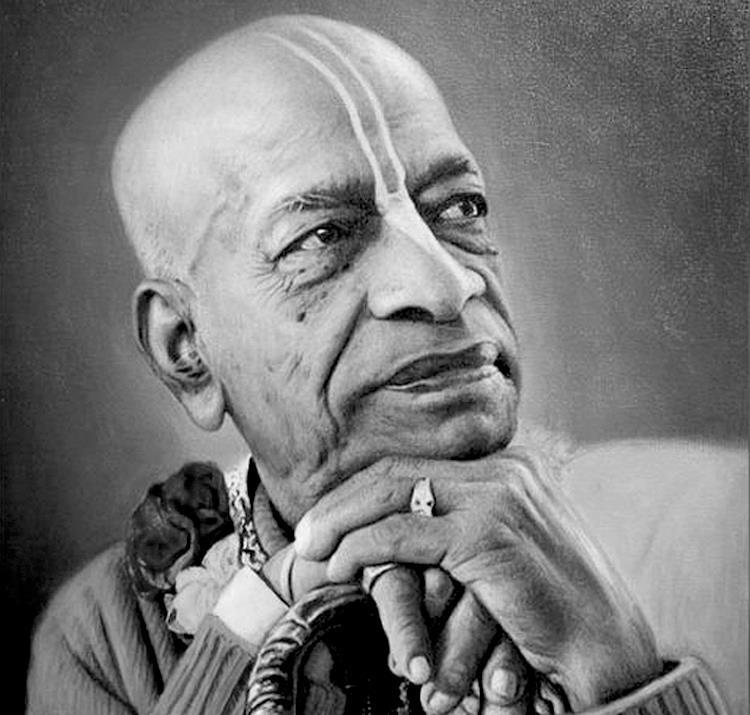
Srila Prabhupada comments on his Purport: "In the beginning of spiritual realization, while one is trying to give up one's attachment to materialism, there is some leaning towards impersonalism, but when one is further advanced he understands that there are activities in the spiritual life and that these activities constitute devotional service. Realizing this, he becomes attached to the Supreme Personality of Godhead and surrenders to Him. At such a time one can understand that Lord Sri Krsna's mercy is everything, that He is the cause of all causes and that this material manifestation is not independent from Him. He realizes the material world to be a perverted reflection of spiritual variegatedness and realizes that in everything there is a relationship with the Supreme Lord Krsna. Thus he thinks of everything in relation to Vasudeva, or Sri Krsna. Such a universal vision of Vasudeva precipitates one's full surrender to the Supreme Lord Sri Krsna as the highest goal. Such surrendered great souls are very rare."
These three sakama devotees must come to the level of jnanis before going back to Godhead. That's clear from the 3rd and 5th Chapters of Bhagavad‑gita, that one has to give up one's material desires to make spiritual advancement. One has to raise up to the platform of niskama and then from that level, go to full surrender.
[ E . OTHERS WHO HAVE NO KNOWLEDGE: (7. 20‑26)
1 . THOSE WHO SURRENDER TO DEMIGODS 2 . THOSE WHO ARE IMPERSONALISTS
1. Surrenders to demigods: Those whose intelligence is illusioned, surrender ‑ but to demigods. Getting their temporary rewards, they go to the planets of the demigods. But Krsna's devotees go to His eternal planets. (20‑23) ]
This Section describes those who surrender but not to Krsna. In the 3rd Chapter, Krsna described already those who surrender to the demigods, after explaining 'ye yatha mam prapadyate...' that He reciprocates with everyone. Then why doesn't everybody surrender to Him? Because some people so much desire material things, they just surrender to the demigods to get them. But Krsna is the One who awards the results through the demigods. The very fortunate 'sukrtina', they approach Krsna for that ‑ to satisfy their material desires. Krsna appreciates that so much that He considers them very dear to Him. But some they have material desires, they don't approach Krsna, because their intelligence has been stolen.